

Cargo Net Tunnels: Why Kids Love Rope Tunnels and Rope Bridges in Playrooms
If you want a playroom feature that instantly pulls kids in, a cargo net tunnel is hard to beat.
Also known as a rope tunnel or rope bridge, this suspended climbing feature creates a pathway through the air that kids can crawl through, hang from, and explore in their own creative ways.
At Wild Child, we design playrooms that encourage movement, independence, and imaginative play. Cargo net tunnels check every one of those boxes. They build strength, invite safe risk taking, and add a sense of adventure that makes a playroom feel truly special.
But what we love most is how kids use them.
Children climb through them, hang underneath them, and sometimes curl up inside them with a book. The tunnel becomes a hideout, a lookout tower, or the headquarters for their latest imaginary adventure.
In many homes, the cargo net tunnel becomes the feature kids talk about most.
Watch how kids naturally explore a cargo net tunnel in a playroom.
They crawl through it, hang underneath it, and turn it into their own adventure pathway.
Why Add a Cargo Net Tunnel to a Kids Playroom?
Below are some of the reasons we love incorporating cargo net tunnels, rope tunnels, and rope bridges into playroom designs.
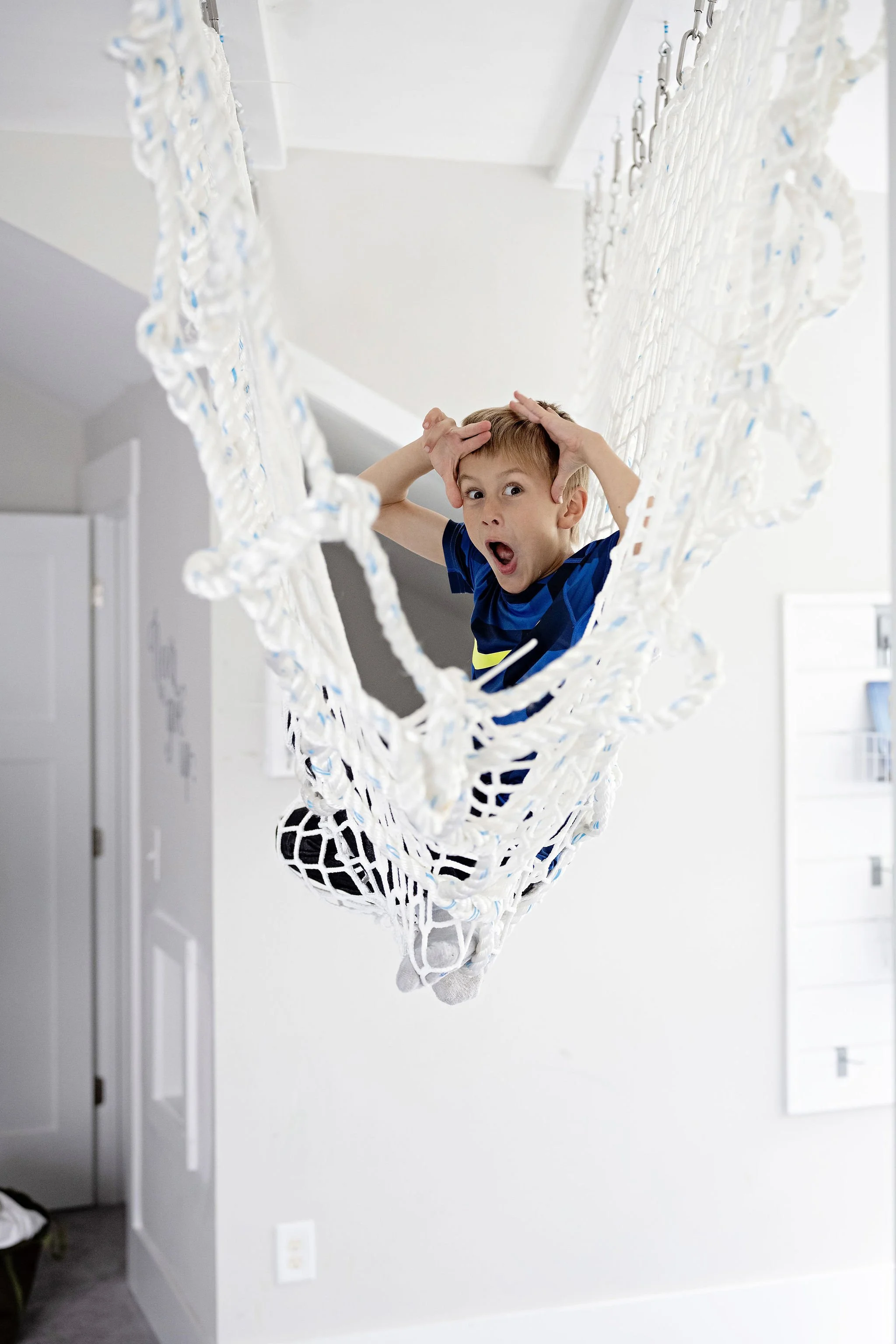
A cargo net tunnel creates a playful path through the air that kids instantly want to explore.
A Cargo Net Tunnel Turns a Playroom Into an Adventure
Many playrooms have climbing walls, swings, or monkey bars. These features are wonderful for movement. But when you connect them with a rope tunnel or rope bridge, the whole room starts to feel like an adventure course.
Instead of isolated play equipment, kids experience the space as a journey.
A child might climb a wall, crawl across the tunnel, and then swing down to the floor. Or they might hang underneath the rope bridge like a jungle explorer crossing a canyon.
Because the tunnel is suspended, it naturally encourages kids to move in different ways:
• crawling through the tunnel
• hanging underneath
• climbing along the outside
The result is a play feature that supports open ended movement. Kids invent their own challenges and games, and the tunnel becomes something new every time they play.
Strength Building in Disguise
One of the reasons cargo net tunnels are such a powerful addition to a playroom is the amount of full body strength they develop.
Children are naturally motivated to climb and hang. A rope tunnel taps into that instinct.
Grip strength
Every movement across the tunnel requires kids to hold onto the rope. This constant gripping strengthens the muscles in their hands and forearms.
Grip strength plays an important role in everyday childhood activities such as handwriting, drawing, and sports.
Upper body strength
Kids use their arms, shoulders, and back muscles to pull themselves forward through the tunnel. Hanging from the underside of the rope bridge is especially effective for building upper body strength.
Core strength
Because the tunnel shifts and moves slightly, children must engage their core muscles to stabilize themselves while climbing.
The first time most adults crawl through one of these tunnels they are surprised by how challenging it is. Many parents tell us they feel like they have just finished a Pilates reformer workout after making their way through the tunnel. It is no joke.
That constant need to stabilize the body activates the core in a powerful way. Kids are essentially doing full body strength work while they play.
And the best part is that kids are rarely thinking about exercise. To them, it simply feels like fun.
Cargo net tunnels pair especially well with climbing walls, creating a sequence of movement challenges that build strength and coordination.

Hanging underneath a rope bridge builds grip strength, upper body strength, and core stability.
A Space Saving Way to Add Big Movement
Another reason designers love cargo net tunnels is that they create a lot of movement opportunity without taking up floor space.
Instead of using valuable square footage, the tunnel uses the vertical space in the room.
We often install rope tunnels to connect:
• two climbing walls
• two gross motor play zones
• a climbing structure and a fort
• different areas of a larger playroom
The tunnel becomes a pathway that encourages kids to travel through the room in active ways.
This is especially valuable in indoor playroom design where families want to maintain an open floor area for other activities like building, imaginative play, or group games.
It is also one of the reasons we frequently recommend rope tunnels in spaces designed for gross motor play.
The “Kids Only” Factor
There is something about a cargo net tunnel that feels a little secret and a little adventurous.
Kids know that adults are probably not climbing through it. The tunnel becomes a feature that feels like it belongs to them.
We often see children use the rope tunnel as:
• a hideout
• a reading perch
• a lookout spot
• a headquarters for imaginary adventures
This sense of ownership is powerful. It helps children feel that the playroom is truly their space.
And when kids feel that a space belongs to them, they tend to spend more time there.
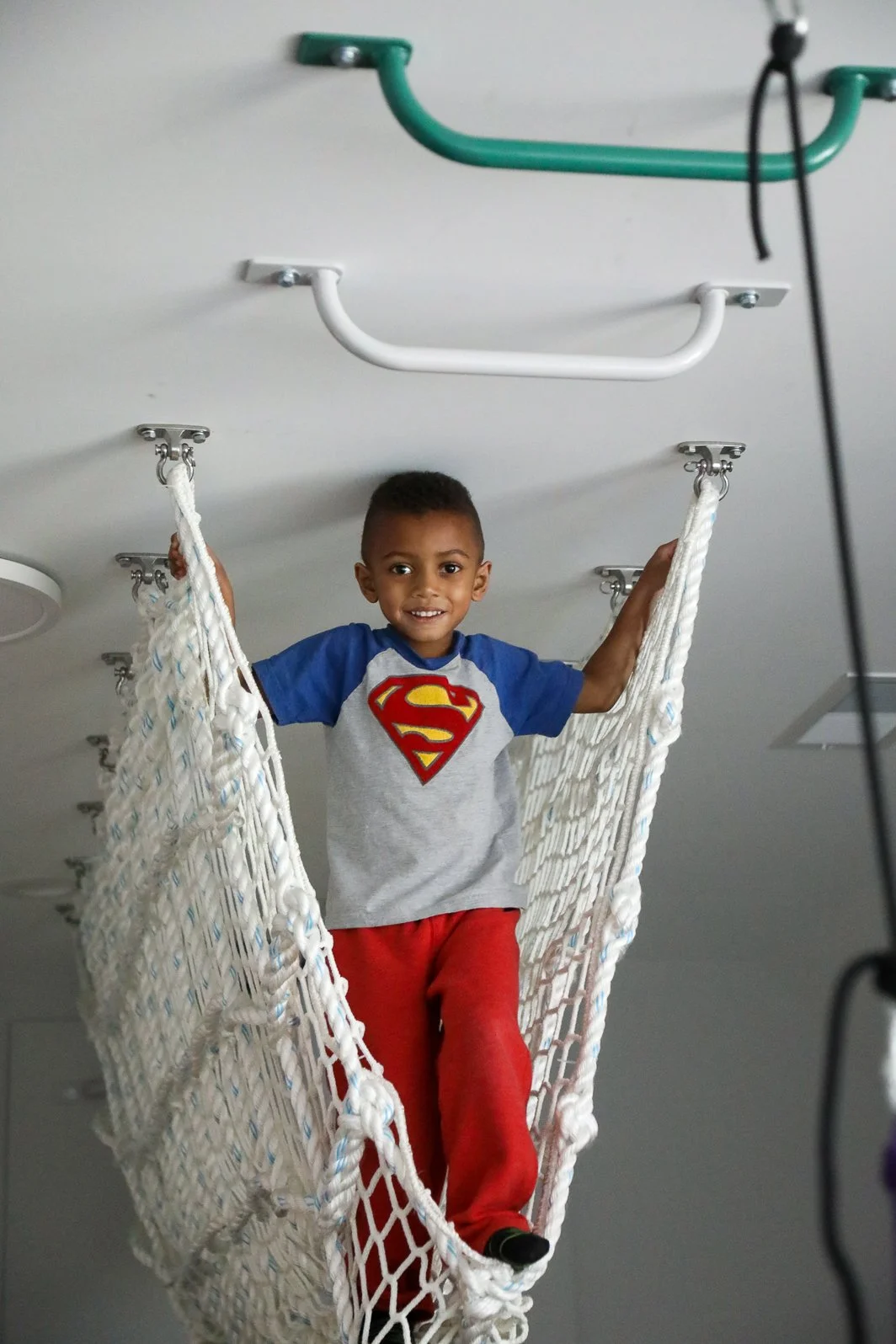
Kids often use cargo net tunnels as pathways, hideouts, or adventure zones.
Safe Risk Taking Builds Confidence
At Wild Child we talk a lot about safe risk taking.
Children benefit from opportunities to test their abilities, solve movement challenges, and feel the satisfaction of mastering something difficult.
A rope tunnel provides exactly this kind of experience.
The tunnel moves slightly as kids crawl through it. They have to figure out where to place their hands and feet. They learn how to balance their bodies and control their movement.
These small challenges help children develop:
• confidence
• resilience
• problem solving skills
• body awareness
Because the tunnel is made from flexible rope and installed within a thoughtfully designed playroom environment, it allows kids to experience adventure in a controlled way.
Parents often tell us that features like this help their children feel braver and more capable over time.
A Play Feature That Grows With Kids
One concern parents sometimes have about playroom features is longevity.
Will kids outgrow them quickly?
Cargo net tunnels tend to have remarkable staying power.
Younger children might crawl slowly through the tunnel or sit inside it like a hammock.
Elementary age kids often turn it into an obstacle course challenge.
Tweens and teens may use it for hanging, lounging, or creative play.
Because the tunnel can be used in many different ways, it evolves along with the child.
This versatility is one of the reasons we often include rope tunnels in playrooms designed for kids through the tween years and beyond.
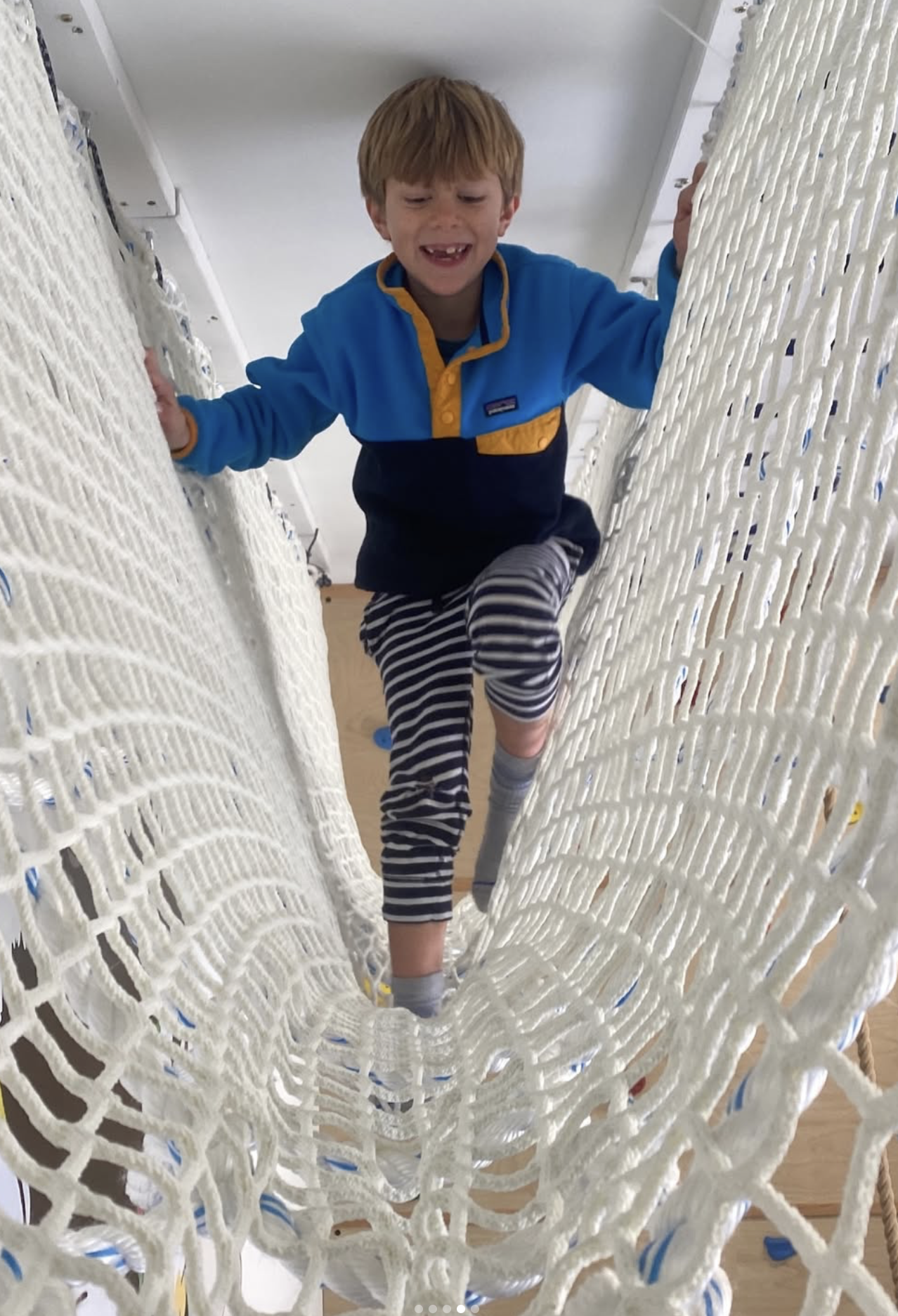
Cargo net tunnels adapt to different ages and play styles.
Real Playroom Designs Featuring Cargo Net Tunnels
Several Wild Child playrooms include cargo net tunnels as part of the design.
Climb On Up
In this kids climbing playroom, the rope tunnel connects climbing features and encourages constant movement across the room.
The boys use the tunnel as part of their daily play routine, especially on rainy days when they need a place to burn energy.
Well Traveled
This foam pit playroom includes a monkey bar course that leads to a cargo net tunnel. The tunnel connects to a fort space, creating an adventurous pathway through the room.
The design allows kids to climb, crawl, and explore while building strength and coordination.
We also incorporate rope tunnels in many custom playrooms where families want to connect different play structures while keeping the floor open.
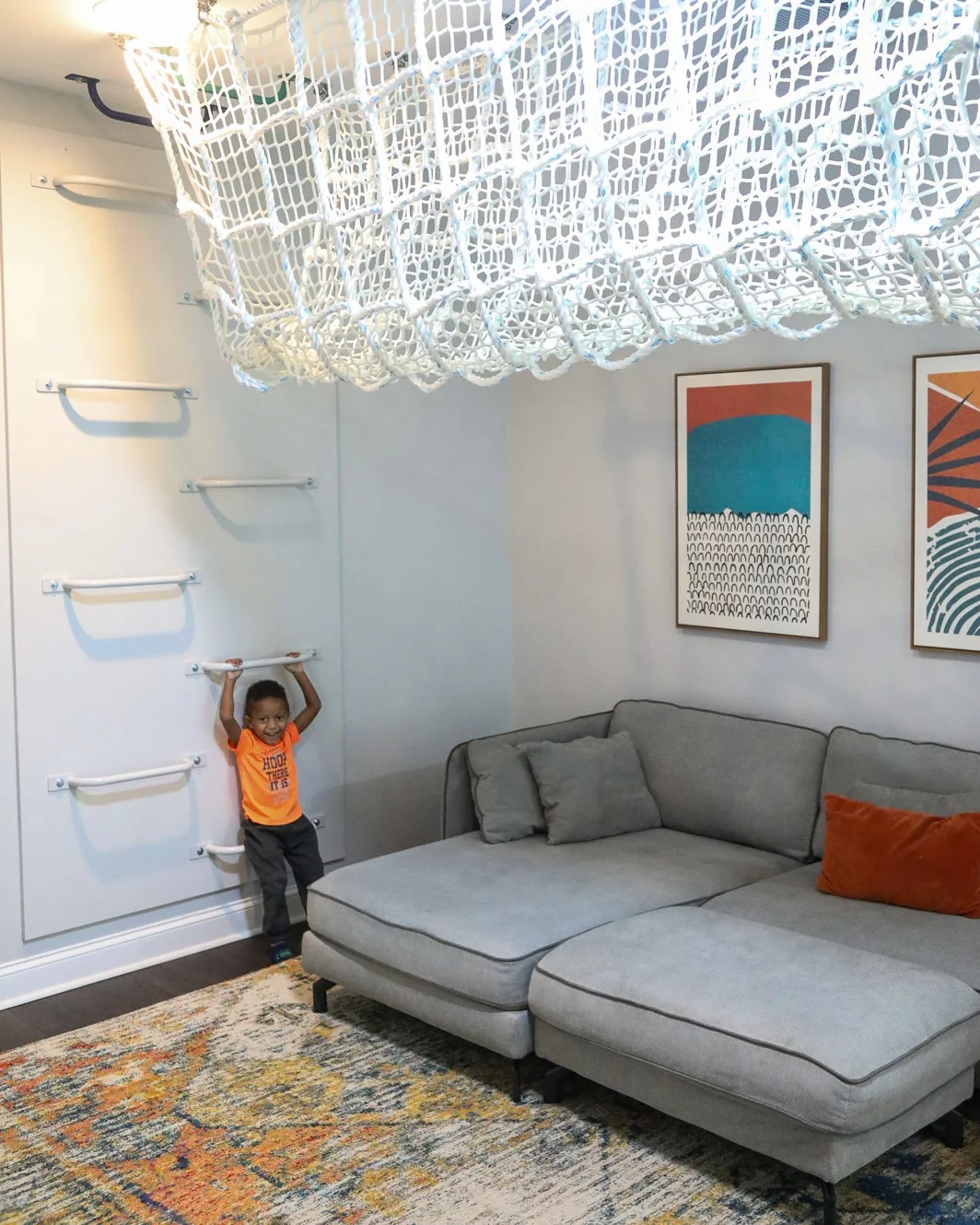
Rope tunnels can connect climbing walls, forts, and other play features.
FAQ: Cargo Net Tunnels for Kids Playrooms
What is a cargo net tunnel?
A cargo net tunnel is a suspended rope structure that kids can crawl through, climb on, and hang from. It is often installed between playroom features like climbing walls or forts to create an adventurous pathway through the air.
Cargo net tunnels are sometimes also called rope tunnels or rope bridges in playroom designs.
Are cargo net tunnels safe for kids?
Yes, when installed properly in a designed play environment. Cargo net tunnels allow kids to experience safe risk taking while developing strength, coordination, and confidence.
The flexible rope structure encourages kids to move thoughtfully while climbing, crawling, and hanging.
What age is best for a cargo net tunnel?
Cargo net tunnels are most popular with elementary age kids through the tween years, but younger children can enjoy them as well.
Younger kids often crawl through slowly or sit inside the tunnel like a hammock. Older kids tend to use them for obstacle course challenges, hanging, and imaginative play.
How do cargo net tunnels help child development?
Cargo net tunnels support several areas of development including:
• grip strength
• upper body strength
• core strength
• balance and coordination
They also encourage problem solving, confidence, and adventurous play.
Because the tunnel moves slightly while kids climb, children must constantly stabilize their bodies, which activates many different muscle groups at once.
What size are cargo net tunnels?
Wild Child cargo net tunnels come in two lengths: 4 feet and 8 feet. Both sizes are 7 feet wide, creating plenty of space for kids to crawl through, hang from, and explore.
When installed, the tunnel hangs in a soft U-shape from the ceiling, with the sides hanging down about 2 & a half to 3 feet from the ceiling (this varies based on how far apart the sides of the tunnel are mounted to the ceiling).
This depth allows kids to crawl through the center of the tunnel while also hanging underneath it for additional movement challenges.
How are cargo net tunnels installed?
Cargo net tunnels are affixed to the ceiling using hanging hardware designed to accommodate a 1 1⁄4 inch diameter rope.
Each tunnel includes flush mount anchors for installation. Screws and bolts are not included since the correct hardware will depend on the structure of the ceiling where the tunnel is installed.
Because the tunnel supports climbing, crawling, and hanging, we recommend working with a licensed contractor to install the cargo net tunnel securely into the appropriate ceiling framing.
Where should a cargo net tunnel be installed in a playroom?
Cargo net tunnels are typically installed between two sturdy mounting points such as climbing walls, beams, or structural play features.
In many playroom designs they connect:
• two climbing walls
• a climbing structure and a fort
• different gross motor play zones
Because they are suspended, rope tunnels create big movement opportunities without taking up floor space.
Shop the Cargo Net Tunnel
If you are planning a playroom and want to add this adventurous feature, you can explore our cargo net tunnel in the Wild Child shop.
The tunnel can be installed in a variety of ways to connect climbing walls, forts, or gross motor play zones.
👉 Shop the cargo net tunnel
Need Help Designing Your Playroom?
At Wild Child we specialize in designing playrooms that support movement, creativity, and child development while still looking beautiful in your home.
If you would like help creating a playroom that your kids will truly use and love, explore our playroom design services.
👉 Explore Wild Child playroom design services
